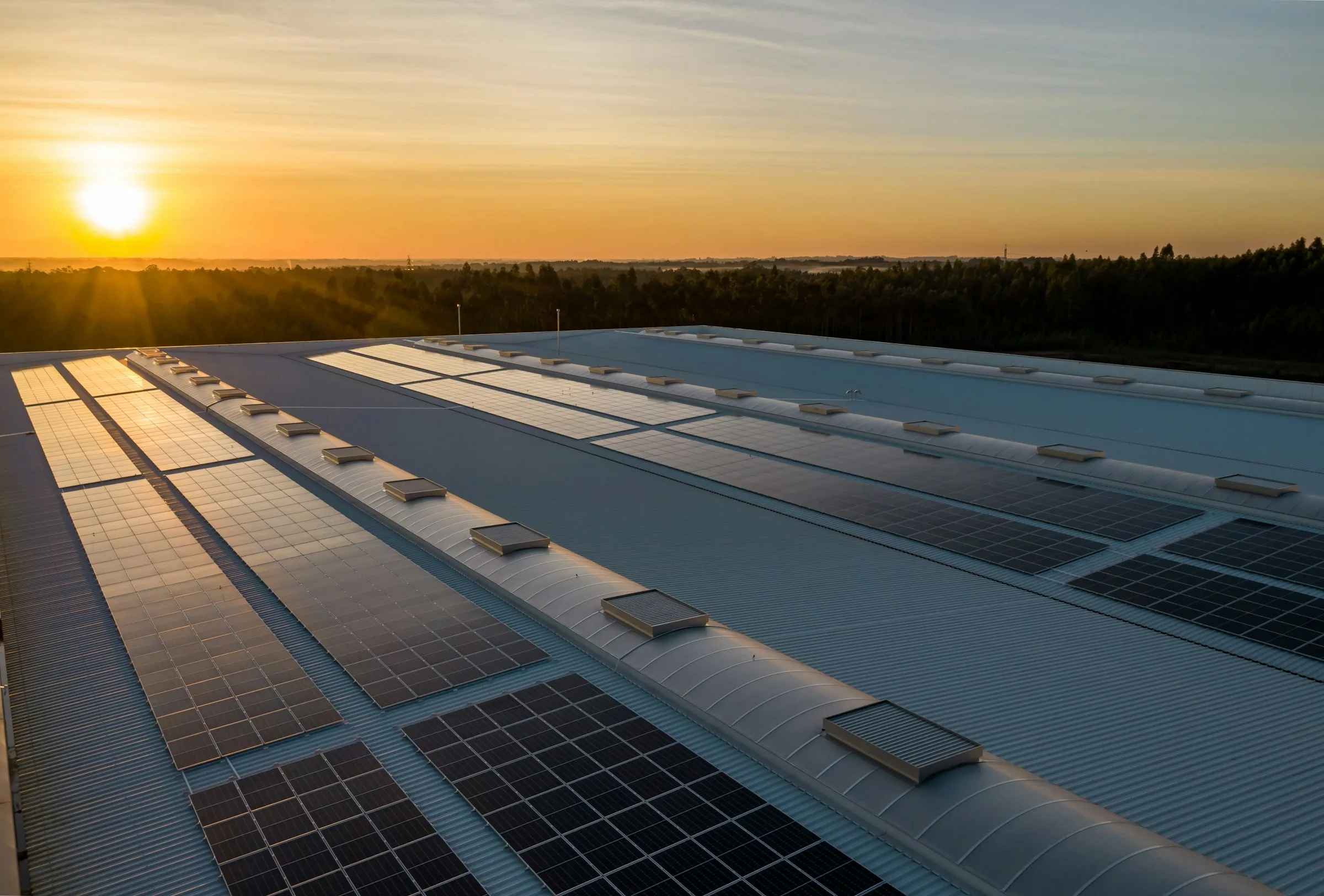
Solar alone generates nothing after sunset or on overcast days. Wind alone is idle when the air is still. Combined — with battery storage behind them — they produce power across more hours of the day, in more weather conditions, than either source can achieve independently. Charania Renewables integrates Vertix vertical-axis wind and Tier-1 solar PV into hybrid generation systems designed for Pakistan’s industrial and commercial sector.
Two generation sources with complementary generation profiles — solar peaks at midday, wind generates at night and in overcast conditions.
Vertical-axis wind turbines designed for urban and industrial sites — low cut-in speed, low noise, no directional requirement.
Solar modules from a vetted shortlist of globally recognised Tier-1 manufacturers selected for Pakistan’s irradiance and conditions.
Small commercial rooftop systems through to large industrial hybrid arrays.
Pakistan’s industrial sector operates 24 hours a day. Solar generation peaks between 10am and 4pm and produces nothing at night. During Pakistan’s monsoon season and on overcast winter days, generation drops significantly even during daylight hours. A solar-only system designed to meet full daytime load will still require full grid draw at night and partial grid draw on poor-irradiance days. The economics of solar-only are good but not transformative for a continuous-operation facility.
Adding wind generation through Vertix changes this equation. Wind generates when solar does not — at night, in overcast conditions and during early morning and evening hours. The two sources have naturally complementary generation profiles. Combined with battery storage to smooth supply curves and absorb excess generation, a hybrid wind-solar-BESS system delivers a higher proportion of on-site generation than solar alone — and a more bankable energy cost projection over a 10–15 year horizon.
Vertix is Charania Renewables’ own wind generation brand. Conventional horizontal-axis turbines require large open sites with consistent prevailing wind direction — conditions rare in Pakistan’s urban and peri-urban industrial zones. Vertix vertical-axis turbines operate in the turbulent, multi-directional wind found on rooftops and industrial estates. They have no directional requirement — they generate regardless of which direction the wind is coming from. Cut-in speed is 2–3 m/s, capturing energy in moderate wind conditions common across Karachi’s coastal belt, Lahore and Faisalabad’s industrial zones.
Power range 1–50 kW. Low noise output suitable for urban rooftop installation. Every Vertix deployment starts with a wind resource assessment — we model your site’s wind resource before recommending any turbine configuration.
This is the core commercial case for hybrid generation. Solar and wind do not compete — they complement each other. Understanding when each generates makes it obvious why a hybrid system delivers more value than either source alone.
The result: a wind + solar system generates across a larger portion of every 24-hour period than solar alone. Combined with a BESS to store surplus and smooth supply, a hybrid system dramatically reduces grid dependency at all hours — not just during daylight.
Consider a Karachi factory running 7am to 11pm. A solar-only system covers the 9am–4pm window well. From 4pm onwards, as solar tapers off and the evening shift starts, the grid takes over entirely. This is exactly when Karachi’s sea breeze is at its strongest.
Adding a Vertix GV-3KW or GVH-5KW to the same system means wind generation starts contributing from approximately 3pm, continues through the evening shift, and keeps the BESS charged overnight. The morning shift starts with a charged battery bank, reducing the time before solar takes over again.
The combined system has fewer zero-generation hours, a flatter daily import curve, and a better economics case than solar alone — particularly for facilities with significant off-peak loads.
Solar is the volume generation source in every hybrid system we design. We source PV modules from a vetted shortlist of Tier-1 manufacturers — globally bankable, proven performance warranties, tested for Pakistan’s irradiance profile and ambient temperatures. We do not install solar in isolation. Every solar array we design is sized around your load profile and specified to pair with storage and, where the site warrants it, wind generation. The array is one layer of the system — not the system itself.
A complete hybrid generation and storage system integrates four layers under a single energy management system. Each layer has a role. The EMS coordinates all four to minimise grid import, maximise self-consumption and maintain backup availability.
PV array generates during daylight hours. Primary generation source in most systems by volume.
Vertix generates when solar cannot — extending generation hours across 24-hour operational cycles.
Battery absorbs excess generation, smooths supply curves and discharges during peaks or outages.
Energy management system coordinates all sources — optimising dispatch against tariff, forecast and availability priority.
Share your site location, load profile and operational hours — our team will model a hybrid wind and solar architecture matched to your consumption pattern and site conditions.